
Dashcam Evidence in Seattle Rear-End Accident Litigation
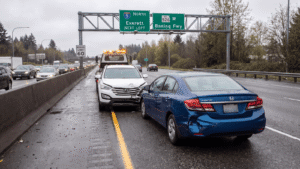
Dashcam Evidence in Seattle Rear-End Accident Litigation
Dashcam evidence can make a major difference after a Seattle rear end accident, especially when drivers, insurers, and witnesses disagree about how the collision occurred. If you are looking for a Seattle rear-end accident lawyer, this guide explains how dashcam footage may support your injury claim, protect against unfair fault arguments, and help your legal team build a stronger case.
This article is for Seattle rear-end accident victims, families, and potential claimants who want practical guidance before speaking with an insurance adjuster or filing a car accident claim. It covers what dashcam evidence is, how to preserve it, how it fits with police reports and medical records, and how Washington law treats fault, damages, and litigation after rear end collisions.
Brumley Law Firm represents Washington personal injury victims in car accident cases. The firm’s experience with video evidence may help identify details that are relevant to a claim. Past results do not guarantee or predict future outcomes.
Why Dashcam Evidence Matters in Seattle Car Accident Cases
Dashcam evidence is video, audio, GPS, speed, or timestamp data recorded by a camera mounted inside or on a vehicle. Some systems record only the road ahead. Others record front and rear views, cabin activity, side angles, parking impacts, speed, braking, GPS position, and impact-triggered clips.
In a Seattle car accident, dashcam footage may show what happened in the seconds before, during, and after a collision. That matters because rear end collisions often happen quickly, in rain, congestion, low visibility, or stop-and-go traffic near I-5, SR 99, Aurora Avenue, Mercer Street, Rainier Avenue, West Seattle Bridge routes, downtown corridors, and busy intersections controlled by traffic control devices.
Seattle collision data and roadway safety trends also make careful evidence preservation important. The Washington State Department of Transportation crash data page explains that crash records may include location, date, time, weather, contributing circumstances, officer narrative, diagrams, and collision type, which are all details that can be compared against video evidence.
What Types of Dashcam Footage Should You Look For?
The most useful footage is usually the original, unedited dashcam video from the victim’s vehicle, the at fault driver’s vehicle, nearby rideshare vehicles, delivery vehicles, commercial vehicles, buses, or other drivers who stopped near the accident scene.
Victims should also think beyond the obvious camera. A car crash may be captured by front-facing footage, rear-facing footage, parked vehicle security mode, fleet cameras, rideshare interior cameras, motorcycle helmet cameras, bicycle cameras, business surveillance cameras, residential doorbell cameras, traffic cameras, and nearby vehicle cameras. In our experience reviewing injury claims, the best video is often found because someone asked quickly, before the file was overwritten.
How Dashcam Footage Strengthens Personal Injury Claims
Dashcam footage helps with proving negligence because it can show the events leading up to the accident. It may reveal distracted driving, speeding, sudden lane changes, unsafe following distance, brake light timing, poor weather, standing water, road glare, low visibility, or a driver failed to react to traffic slowing ahead.
Video also helps connect the collision to physical injuries. A rear-end impact that looks minor in photos may show a sudden jolt, head movement, airbag deployment, seatback movement, or multiple impacts when watched on video. That can support medical care documentation, immediate medical bills, future medical expenses, and injury claims involving neck injuries, back injuries, concussions, traumatic brain injuries, spinal cord injuries, emotional trauma, and other serious injuries.
Dashcam evidence also reduces reliance on subjective witness statements. Witnesses may be honest but mistaken about timing, speed, traffic signals, or which impact came first. A clear recording can provide an unbiased view of accidents, especially when compared with collision reports, vehicle damage, repair estimates, and medical records.
Dashcam Evidence and Distracted Driving
Dashcam video can reveal distractions that a driver may not admit. A rear camera may show a driver looking down before impact. An interior commercial fleet camera may show phone use. A forward-facing camera may show the other vehicle drifting, failing to brake, or approaching too quickly.
The National Highway Traffic Safety Administration distracted driving resource reports that 3,208 people were killed in motor vehicle crashes involving distracted drivers in 2024. For Seattle rear-end crashes, that matters because insurers may claim the collision was unavoidable when video evidence may show the rear driver had time to slow, stop, or respond.
A Seattle distracted driving accident lawyer can use dashcam footage alongside phone records, witness accounts, vehicle data, and collision reports to evaluate whether distraction played a role.
Gathering and Preserving Dashcam Evidence After a Car Accident
The first rule is simple: preserve the original footage immediately. Many dashcams overwrite older video automatically, sometimes within hours or days. If you keep driving after a collision, the device may continue recording and erase the clip you need.
After the accident occurred, remove the memory card only if it is safe and you know how to do so without damaging the file. If not, stop the device from recording, take photos of the device screen, and ask your attorney or a technically knowledgeable person to help. Save the original file in its native format, including metadata, timestamps, GPS data, and device information.
Create multiple backups on separate storage media. Save one copy to a computer, one to cloud storage, and one to an external drive. Record the dashcam brand, model, serial number, memory card size, date settings, time zone settings, and whether the device clock was accurate. Do not edit, trim, compress, rename, or filter the original file.
Why “Footage Immediately” Matters
Preserving footage immediately protects the evidence and helps prevent spoliation concerns. Spoliation means evidence was destroyed, altered, lost, or allowed to disappear when it should have been preserved. In Washington, spoliation arguments can create serious problems in litigation, including disputes over what the missing evidence would have shown.
Courts and insurers usually prefer the original dashcam file with metadata intact. A short clip may still be useful, but an edited version can invite questions about what happened before or after the clip. If the other side claims footage manipulation, your legal team may need the full file, file history, device settings, memory card, and chain-of-custody notes to respond.
Video quality also matters. Unclear footage may still help with timing or general movement, but blurry, dark, obstructed, or audio-only recordings may receive less weight. If video quality is poor, accident reconstruction experts may still be able to compare the footage with scene photos, vehicle repairs, EDR data, traffic light sequencing, and property damage patterns.
Combining Dashcam Evidence With Collision Reports and Other Records
Dashcam footage is strongest when it fits into a broader evidence package. It should not replace police reports, medical records, witness statements, repair estimates, insurance information, and photos of the accident scene. It should support and clarify them.
After a Seattle car accident, request the official collision report promptly. Collision reports may identify the drivers, location, road conditions, weather, statements, contributing factors, diagrams, and whether citations were issued. Photos of the crash scene should also be taken soon after the accident because skid marks, debris, vehicle positions, weather conditions, and traffic control devices may change quickly.
Medical records are just as important. If you delay treatment, an insurance adjuster may argue your injuries were minor or unrelated. Prompt medical care helps document symptoms, diagnosis, treatment, restrictions, medical expenses, lost wages, future care needs, and the connection between the collision occurred and your injury claims.
Dashcam Evidence, EDR Data, and Accident Reconstruction
Dashcam footage may show what the human eye sees, while Event Data Recorder data may show what the vehicle recorded. EDR data can sometimes include speed, braking, throttle input, seatbelt status, and impact-related data. Not every vehicle stores the same information, and access may require technical steps.
In complex cases, accident reconstruction experts may compare dashcam video with EDR data, crush damage, roadway geometry, traffic signal timing, vehicle damage, and repair estimates. This can help determine whether the lead driver braked reasonably, whether rear drivers had enough following distance, or whether multiple vehicles caused separate impacts.
A Seattle car accident lawyer can help decide whether EDR preservation letters, subpoenas, expert inspections, or third-party video requests are needed.
Authentication, Admissibility, and Chain of Custody
The footage must be authentic and unedited to be most useful in court. Washington’s Evidence Rule 901 explains that authentication requires evidence sufficient to support a finding that the matter is what the proponent claims it is.
For dashcam video evidence, authentication may involve testimony from the driver who owned the device, the person who downloaded the file, or an expert who reviewed the metadata. Helpful details include the device model, file name, creation date, storage location, backup history, and confirmation that the video fairly shows the relevant event.
A simple chain-of-custody log can help. Write down who had the file, when they received it, where it was stored, whether copies were made, and whether the original memory card was preserved. This is especially important if a personal injury lawsuit becomes necessary.
Preservation Notices and Spoliation Risks
Key evidence often disappears quickly after a crash. Commercial vehicles may overwrite fleet camera footage. Nearby businesses may delete surveillance video. Rideshare or delivery platforms may preserve trip data only if asked. Other drivers may erase their dashcam footage without realizing it matters.
A preservation letter tells a person or company to keep relevant evidence. In commercial vehicle cases, that may include dashcam footage, driver logs, GPS records, maintenance files, delivery schedules, dispatch records, ELD data, and inspection records. In multi-vehicle cases, it may include third-party camera footage from vehicles, storefronts, apartment buildings, and parking facilities.
The earlier a legal team sends preservation notices, the better. A Seattle truck accident lawyer may also look for trucking company logs, fleet camera systems, driver qualification records, and other evidence specific to commercial vehicles.
How Washington Comparative Negligence Affects Rear-End Claims
In Washington, there is often a practical presumption that the rear driver is at fault in a rear-end collision because drivers are expected to follow at a safe distance and respond to traffic ahead. Washington law does not make every rear driver automatically responsible in every situation, but rear drivers often face close scrutiny.
Washington follows pure comparative negligence. Under RCW 4.22.005, contributory fault reduces compensatory damages in proportion to the fault assigned to the claimant, but it does not bar recovery. In plain terms, you can recover damages even if partially at fault, but compensation is reduced by the percentage of fault assigned to you.
Even minor fault can significantly affect settlement value. For example, if damages are valued at $100,000 and an insurer argues the claimant is 20% responsible, the offer may drop by $20,000. This is why insurance companies often argue for higher fault percentages against claimants during settlement negotiations.
How Dashcam Video Can Change Fault Allocation
Dashcam footage can help prove fault in car accident claims because it captures events leading up to the accident. It may show the rear driver was distracted, speeding, following too closely, or failed to brake. It may also show weather, low visibility, road conditions, lane positioning, sudden traffic congestion, or whether a front driver made an unsafe stop.
Video can also rebut the rear-driver presumption. For example, a front driver may have cut into a lane without enough space, braked suddenly for no traffic reason, reversed, had no working brake lights, ignored traffic control devices, or stopped unexpectedly after an unsafe maneuver. In those situations, dashcam footage may support a more accurate comparative negligence analysis.
For claimants, the goal is not to “win” a blame argument by opinion. The goal is proving fault through reliable evidence, including dashcam video, collision reports, witness statements, medical records, and reconstruction when needed.
Multi-Vehicle Collisions and Chain-Reaction Crashes
Multi-vehicle rear end collisions are common in Seattle traffic, especially during rain, backups, merges, and freeway slowdowns. When multiple vehicles are involved, a dashcam can help isolate each impact by timestamp.
This matters because multiple vehicles may strike the same claimant. The first impact may cause one injury, while a second or third impact worsens it. Timestamped video can show whether the claimant was stopped, whether the lead driver had already been hit, whether another driver pushed a vehicle forward, and whether the at fault driver was actually one of several negligent other drivers.
In chain-reaction crashes, fault may be shared among rear drivers, front drivers, commercial vehicles, or drivers who changed lanes unsafely. Accident reconstruction experts may use frame-by-frame video review to analyze lane positions before each collision, braking sequence, crush patterns, impact timing, and speed changes.
Commercial Vehicles and Fleet Dashcams
Commercial vehicles often create a different evidence picture. Delivery vans, buses, rideshare vehicles, taxis, construction trucks, and tractor-trailers may have dashcams, GPS, telematics, ELD data, dispatch logs, and internal safety policies.
If a commercial driver rear-ended you, do not assume the company will preserve footage unless asked. Fleet systems may overwrite video or classify it based on internal triggers. A lawyer can send preservation notices and pursue subpoenas if voluntary production is delayed.
Commercial cases may also involve company training, driver fatigue, vehicle maintenance, route pressure, loading issues, and whether the driver failed to follow reasonable safety procedures. Dashcam evidence is often the starting point, but it is rarely the only evidence needed.
Working With Seattle Car Accident Attorneys
Seattle car accident attorneys can help preserve dashcam evidence before it disappears. Early legal representation matters because the legal team can send preservation letters, request collision reports, communicate with insurers, locate third-party cameras, and identify whether experts are needed.
Provide raw footage to your car accident lawyer, not just a shortened clip. Include the original file, backup copies, device information, dashcam settings, and any notes about whether the time stamp is accurate. If you already sent a clip to an insurer, tell your attorney exactly what was sent and when.
An experienced attorney can also help coordinate expert testimony. If the insurer claims the video is unclear, incomplete, misleading, or manipulated, an expert may explain the camera angle, speed perception, frame rate, image distortion, lighting, and how the footage matches the physical evidence.
Insurance Strategies Using Dashcam Evidence
Insurance disputes may arise over vehicle damage, medical treatment, prior conditions, or fault. A lawyer can help evaluate the evidence and communicate with the insurer. Insurance adjusters may consider vehicle damage, treatment timing, prior medical history, comparative fault, and other facts when evaluating a claim.
Dashcam footage may help address disputes about how the crash happened, especially when an insurer questions fault, impact severity, or causation. In a demand letter, the legal team may submit unedited clips promptly, identify critical timestamps, explain how the footage aligns with medical records, and connect the impact to immediate medical bills, ongoing treatment, lost income, vehicle repairs, and pain symptoms.
Do not admit fault when notifying your insurer. Provide basic facts, exchange insurance information, and avoid guessing about speed, distance, injury severity, or whether you “feel fine.” Some injuries develop over hours or days, and early statements may be used against you later.
Practical Steps for Victims Filing a Seattle Car Accident Claim
After a Seattle car accident, call 911 if anyone is injured, if vehicles block traffic, if there are serious injuries, or if the accident scene is unsafe. Get medical care as soon as possible and follow treatment instructions. Save records for emergency care, imaging, prescriptions, physical therapy, specialist visits, mileage, medical bills, and future medical expenses.
File or request the proper collision reports. If law enforcement responds, ask how to obtain the report. If no officer completes one and the damage or injury threshold applies, follow Washington reporting requirements. Save police reports, claim numbers, driver information, license plates, witness contact information, photos, and all insurance information.
Preserve receipts, wage-loss documentation, pay stubs, employer letters, repair estimates, rental car receipts, towing charges, property damage records, and any out-of-pocket costs. Economic damages cover documented financial losses from accidents, while non-economic damages may include pain, suffering, emotional trauma, loss of enjoyment, inconvenience, and the human impact of physical injuries.
Damages Available Under Washington Law
Washington allows recovery for economic and non-economic damages in personal injury claims. Economic damages may include medical expenses, immediate medical bills, future medical expenses, lost wages, lost income, reduced earning capacity, vehicle repairs, repair estimates, and other documented financial losses.
Non-economic damages may include pain, suffering, emotional distress, loss of enjoyment of life, disability, scarring, and the practical impact of serious injuries on daily life. Punitive damages are generally not available in Washington unless a specific statute allows them, so most personal injury law strategy focuses on proving negligence, causation, and compensatory damages.
Washington’s RCW 4.16.080 generally gives injury victims three years to file a lawsuit for covered personal injury claims. Waiting can still harm a case because dashcam footage, witness memories, crash scene evidence, and third-party video may disappear much earlier.
Brumley Law Firm’s Approach to Dashcam Evidence
Brumley Law Firm’s legal team reviews video evidence as part of a broader case strategy, not as a standalone shortcut. A dashcam may show the crash, but the claim still needs medical records, damages documentation, liability analysis, and careful negotiation.
Brumley Law Firm focuses on Washington personal injury matters and has handled many accident-related cases. Any description of case volume should be understood as general background, not a prediction of the outcome in any specific case. Prior case results and case volume do not guarantee a specific outcome, but they can show familiarity with the legal process, insurance tactics, injury claims, and litigation preparation.
For many accident victims, the value of legal knowledge is knowing what to preserve, what to request, and how to respond when an insurance company refuses to offer fair compensation. The goal is to pursue compensation supported by the evidence and the applicable law. No attorney can guarantee a specific result.
Checklist: Immediate Actions After a Seattle Rear-End Collision
Use this checklist as soon as you are safe:
- Call 911 if anyone is injured or the roadway is unsafe.
- Get medical care, even if symptoms seem mild at first.
- Preserve dashcam footage immediately and stop the device from overwriting the file.
- Save the original dashcam video in its native format.
- Make at least two backups on separate storage locations.
- Photograph vehicle damage, debris, skid marks, traffic signals, weather, and the accident scene.
- Get names, phone numbers, insurance information, and license plates from other drivers.
- Save witness contact information immediately.
- Write a timeline while details are fresh.
- Request police reports and collision reports.
- Keep medical bills, repair estimates, receipts, and wage-loss records.
- Speak with a car accident lawyer before giving detailed recorded statements.
Frequently Asked Questions
Is Dashcam Evidence Admissible in a Washington Personal Injury Lawsuit?
Dashcam evidence may be admissible if it is relevant, authentic, and properly preserved. The original file, metadata, chain-of-custody notes, and witness testimony can help show the video is what you claim it is.
A court may still consider objections about editing, missing context, poor quality, privacy, or whether the footage fairly shows the collision. This is why victims should preserve the full original file and avoid editing.
Can Edited Dashcam Footage Hurt My Claim?
Yes. Edited footage may still be useful, but it can create avoidable questions. An insurer or defense attorney may argue that the missing seconds before or after the clip matter.
If you already made a shortened clip, keep it, but do not delete the original. Give both versions to your lawyer and explain exactly what was changed.
Can Dashcam Footage Prove the Front Driver Was Negligent?
Yes, in some cases. Dashcam footage can show the front driver cut in too closely, stopped suddenly without a traffic reason, reversed, had nonworking brake lights, ignored traffic control devices, or created a hazard.
This does not automatically shift all responsibility. Washington comparative negligence may assign fault among multiple drivers depending on the evidence.
What If the Dashcam Timestamp Is Wrong?
A wrong timestamp does not always make footage useless. Your attorney may compare the video with 911 records, collision reports, phone photos, GPS data, witness statements, traffic camera records, and medical records.
Still, a wrong timestamp should be disclosed early. Trying to hide it can create credibility problems.
How Does Dashcam Evidence Affect Settlement Negotiations?
Clear dashcam footage can expedite settlement negotiations because it reduces disputes about how the collision occurred. It may help show that the rear driver had enough time to stop, that the claimant was not exaggerating the impact, or that multiple vehicles contributed to the crash.
However, video does not automatically resolve medical damages. You still need medical records, treatment history, bills, wage records, and evidence of how the injuries affected your life.
What If the Other Driver Has Dashcam Footage?
Your lawyer may request it through the insurance claim process, a preservation letter, or formal discovery if litigation begins. If the other driver, company, or insurer allows key evidence to disappear after receiving notice, spoliation issues may arise.
Do not rely on the other side to volunteer helpful footage. Ask early and document the request.
Should I Send Dashcam Footage Directly to the Insurance Adjuster?
Sometimes, but it is usually better to speak with a lawyer first. A short clip may seem helpful but may also leave out context that an insurance adjuster could use to question your claim.
A lawyer can decide whether to send the full file, a highlighted clip, a timestamp summary, or a formal demand package that explains the footage alongside medical records and damages.
Dashcam evidence can provide a clear, unbiased view of accidents, but it must be preserved, authenticated, and used with the right supporting records. If you were injured in a Seattle rear-end collision, Brumley Law Firm can review your footage, explain your options, and help you understand the next steps in your claim.
To discuss your case, contact Brumley Law Firm at (833) 740-2275 for a free consultation with a Seattle rear-end accident lawyer. The team can help protect your legal rights, preserve important evidence, and pursue the compensation available under Washington law.