
Everett Truck Accident Lawyer: Claims for Debris and Unsecured Loads in the Valley
Everett Truck Accident Lawyer: Claims for Debris and Unsecured Loads in the Valley
Overview: Debris and Unsecured-Load Claims in Everett Truck Accidents
A truck accident involving roadway debris or an unsecured load can happen in seconds, but the consequences may last for months, years, or a lifetime. In Everett and throughout the Snohomish River Valley, commercial trucks, delivery vehicles, construction haulers, flatbeds, dump trucks, and semi-trucks move through industrial corridors, port-related routes, I-5, SR 529, US 2, and local roads used by commuters, bicyclists, pedestrians, and families.
For an injured person, a loose load may look like a simple road hazard. Legally, however, an Everett truck accident lawyer may need to examine cargo securement rules, trucking company practices, maintenance records, driver logs, ELD data, police reports, witness statements, and multiple insurance policies. These cases may benefit from early legal guidance because physical debris can disappear quickly, electronic data may be overwritten, and insurers may begin investigating soon after the crash.
Brumley Law Firm represents injured people and families across Western Washington. The firm has more than 30 years of combined legal experience and handles personal injury matters with careful preparation and personalized client service. Past case outcomes do not guarantee future results, and each case depends on its own facts and law. While no law firm can guarantee a result, Brumley Law Firm prepares cases carefully for negotiation and trial, with the goal of pursuing fair compensation supported by the facts, the law, and the client’s documented losses.
Overview of Truck Accident Claims Involving Debris
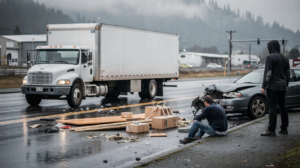
A truck accident caused by roadway debris may involve cargo falling from a commercial vehicle, tools or equipment dropping from a work truck, gravel spilling from a dump truck, lumber shifting from a flatbed, tire fragments left after tire blowouts, or unsecured materials that force nearby drivers to swerve. These claims can affect a person in a passenger vehicle, a motorcyclist, a pedestrian, a bicyclist, or another truck driver.
Unsecured-load cases differ from an ordinary car accident because the crash may not involve direct contact with the commercial truck. A driver may crash while avoiding debris, a bicyclist may strike a dropped object, or a vehicle may be hit by cargo that separated from a trailer. A truck accident claim may still exist even when the truck is no longer at the accident scene, but proving the claim usually requires fast investigation.
These cases matter to both truck and car accident victims because large trucks and commercial vehicles carry materials that can create sudden, unavoidable hazards, and an Everett car accident attorney may be needed to help injured drivers navigate the insurance and legal process after a collision involving debris. According to the National Highway Traffic Safety Administration (NHTSA), 2023 data showed 5,472 deaths and an estimated 153,452 injuries in traffic crashes involving large trucks, and 70% of people killed in large-truck crashes were occupants of other vehicles.
Who Are Truck Accident Victims?
Truck accident victims include drivers and passengers in passenger vehicles, other commercial truck drivers, motorcyclists, pedestrians, bicyclists, rideshare passengers, delivery workers, road crews, and people standing near disabled vehicles. In an Everett truck accident, the victim may have been struck by the truck, hit by cargo, forced into another lane, or injured in a secondary auto accident caused by debris.
The most severe injuries often occur when a smaller vehicle collides with a large truck, slides beneath a trailer, or hits heavy debris at highway speed. Common serious injuries include traumatic brain injuries, spinal cord trauma, broken bones, burns, lacerations, internal injuries, and emotional trauma such as anxiety or PTSD. Catastrophic injuries, including paralysis and severe brain injuries, may require long-term rehabilitation, home modifications, future surgeries, and ongoing medical care.
Causes and Trucking Industry Practices That Create Debris
The causes of truck accidents involving debris often begin before the vehicle enters the road. Improper loading practices may include using the wrong number of tie-downs, failing to balance cargo weight, using worn securement devices, leaving tools loose in a truck bed, failing to tarp loose materials, or allowing cargo to shift during transport.
Cargo shift and spill scenarios are especially dangerous for dump trucks, construction vehicles, flatbeds, logging trucks, box trucks, and trailers carrying mixed freight. When cargo moves inside or on top of a commercial truck, it can change the vehicle’s balance, contribute to rollover accidents, increase braking distance, or spill into travel lanes.
Maintenance failures can also create debris. Tire blowouts may leave rubber fragments across the roadway. Broken straps, defective gates, loose trailer doors, damaged latches, worn coupling systems, and poorly maintained cargo equipment can cause objects to escape. Trucking companies and commercial truck drivers are expected to maintain safe equipment and inspect commercial vehicles before and during trips.
Industry pressures may also play a role. Delivery deadlines, driver fatigue, distracted driving, inadequate training, rushed loading, and poor supervision can increase the risk that a truck driver or trucking company misses a load securement problem. These pressures do not automatically prove truck accident liability, but they are important issues for truck accident attorneys to investigate.
Traffic Laws and Regulations Impacting Debris Claims
Washington law directly addresses unsecured loads. Under RCW 46.61.655, a vehicle on a public highway must be constructed or loaded to prevent its load from dropping, sifting, leaking, or escaping, and required coverings must be secured so the load or covering does not become a hazard to other road users.
Federal regulations also matter. The Federal Motor Carrier Safety Administration (FMCSA) explains that cargo securement rules are intended to reduce accidents caused by cargo shifting on, within, or falling from commercial motor vehicles. These federal regulations can be important evidence in a commercial truck accident or semi truck accident involving fallen materials.
The Federal Motor Carrier Safety Administration also regulates hours of service. FMCSA’s Summary of Hours of Service Regulations explains limits such as the 11-hour driving limit after 10 consecutive hours off duty, the 14-hour driving window, required breaks after 8 cumulative driving hours, and 60/70-hour limits. These rules are relevant when driver fatigue may have contributed to missed inspections, unsafe decisions, or truck crashes.
Washington state law also requires reporting certain collisions. Under RCW 46.52.030, if law enforcement does not file the report, a driver involved in an accident causing injury, death, or property damage at or above the required threshold must file a written report within four days. WAC 446-85-010 sets that property damage threshold at $1,000.
Federal and state regulations are often essential in proving negligence in debris-related accidents. A wa truck accident attorney may compare the driver’s conduct, the trucking company’s safety practices, and the cargo loaders’ work against these traffic laws, securement rules, and inspection requirements.
Liability in a Truck Accident Case for Unsecured Loads
Liability in a truck accident case can extend beyond the truck driver. Depending on the evidence, liable parties may include the trucking company, the driver’s employer, cargo loaders, shippers, brokers, maintenance crews, trailer owners, equipment manufacturers, or another at fault party involved in the chain of transport.
A trucking company may be responsible if unsafe policies, poor supervision, inadequate training, rushed schedules, failure to maintain commercial vehicles, or weak inspection procedures contributed to the crash. Employers may also face claims when a commercial truck driver was acting within the scope of employment.
Cargo loaders may be involved when cargo was stacked improperly, tie-downs were misused, weight was poorly distributed, or required tarps and netting were not applied. In some cases, a shipper or loading contractor may have created a dangerous condition before the truck left the facility.
Manufacturers and maintenance providers may also be reviewed if defective straps, failed trailer parts, tire defects, braking problems, or cargo-control equipment failures contributed to the accident. This is why unsecured-load cases can involve multiple parties and multiple liable parties.
An experienced truck accident attorney will also examine whether distracted driving, speeding, tailgating, jackknife accidents, underride accidents, rollover accidents, tire blowouts, or unsafe lane changes interacted with the debris hazard. A single truck accident in Everett may involve several overlapping causes of truck accidents.
Evidence Needed To Prove Unsecured Load Liability
After a truck accident, evidence collection should begin as soon as possible. Accident scene photos can show vehicle positions, debris fields, skid marks, cargo fragments, damaged guardrails, lane markings, visibility conditions, road design, and the location where evasive action occurred.
Debris documentation matters because the object itself may connect the crash to a specific vehicle, company, load, or product. Photos should capture the debris from multiple angles, the surrounding roadway, nearby signs, damage to the vehicle, and any identifying features such as serial numbers, labels, cargo type, or unique materials.
Police reports can help establish the date, time, location, parties involved, reported injuries, witnesses, officer observations, and whether distraction was reported. Washington’s accident report statute also notes that accident reports must include material facts such as location, circumstances, conditions, people and vehicles involved, insurance information, personal injury or death, property damage, and whether any driver was distracted. (Washington State Legislature)
Truck maintenance and load records may show inspection failures, prior mechanical concerns, cargo weight, securement methods, trailer condition, repair history, and who loaded the truck. These records may be held by the trucking company, cargo loaders, brokers, maintenance vendors, or insurers.
Driver logs and electronic logging device data can show hours worked, rest periods, route history, stops, speed patterns, and possible driver fatigue. ELD data may also help confirm whether the truck was near the accident scene when the debris appeared.
Eyewitness statements can be decisive. Witnesses may have seen cargo fall, a tarp loosen, a trailer door open, a tire blowout occur, or a vehicle swerve to avoid a hazard. A skilled truck accident lawyer will try to identify witnesses before memories fade.
Video evidence may come from dashcams, nearby businesses, traffic cameras, residential security systems, fleet cameras, or construction site cameras. In debris cases, early preservation letters are often necessary because video systems may delete footage automatically.
Physical and digital evidence together can support a truck accident injury claim. Without prompt legal action, the insurance company may argue that the debris came from an unknown source, that the injured person overreacted, or that another driver was mainly responsible.
Damages and Fair Compensation for Truck Accident Victims
Victims of Washington truck accidents may seek compensation for medical expenses, emergency care, hospitalization, surgery, physical therapy, medication, assistive devices, future care costs, and related medical bills, and an Everett personal injury lawyer can help document and pursue these losses through a civil claim. Serious injuries and catastrophic injuries may require life-care planning to estimate long-term medical and support needs.
Lost wages are also part of a truck accident claim. If the injured person cannot return to the same job, damages may include reduced earning capacity, missed promotions, retraining needs, and long-term work restrictions. A personal injury attorney may work with medical, vocational, and economic experts to document these losses.
Non-economic damages may include pain and suffering, emotional trauma, loss of enjoyment of life, inconvenience, disability, disfigurement, anxiety, sleep disruption, and the impact on family life. These losses are personal, but they must still be supported with medical records, testimony, and detailed evidence.
In fatal cases, eligible family members may pursue wrongful death damages. These claims require careful review of Washington law, family relationships, economic support, funeral expenses, and the loss of companionship and support.
The purpose of a personal injury claim is to pursue fair compensation, not simply a fast settlement. A fair settlement should reflect the full scope of injury, future risk, liability evidence, insurance coverage, and how the truck accident has changed the victim’s life.
Role of an Accident Lawyer and Truck Accident Attorney
An accident lawyer helps injured people understand their options, protect deadlines, communicate with insurers, and pursue compensation through the legal process. In a debris or unsecured-load case, the lawyer’s role often begins with identifying the commercial vehicle, preserving evidence, and determining who may be legally responsible.
Everett truck accident attorneys may investigate the trucking industry records behind the crash. This can include driver qualification files, inspection reports, load manifests, maintenance records, dashcam footage, ELD data, bills of lading, hiring policies, dispatch communications, and safety training materials.
A WA truck accident attorney may coordinate expert witnesses such as accident reconstructionists, trucking safety experts, cargo securement specialists, medical experts, vocational experts, and economists. These experts can help explain how the crash happened, whether federal and state regulations were followed, and how the injuries affect the victim’s future.
Personal injury lawyers also build negotiation strategy. That strategy may involve calculating damages, presenting evidence clearly, responding to disputed liability claims, addressing comparative negligence arguments, and preparing the case as if litigation may become necessary.
Because truck accident cases can involve multiple parties, federal regulations, significant insurance coverage, and disputed liability, many injured people choose to speak with an attorney about their options. A skilled truck accident lawyer can help protect the client’s rights while the legal team handles the investigation and insurance communications.
The Truck Accident Case Timeline and Process
The truck accident claims process usually begins with an initial consultation. During this meeting, the legal team reviews how the crash happened, where it occurred, what injuries were reported, what medical care has been received, whether police reports exist, and whether photos, witness information, or insurance letters are available.
The next stage is investigation and evidence preservation. The law firm may send preservation letters to the trucking company, insurer, cargo loaders, maintenance providers, and other potential parties. These letters may request that they preserve the truck, trailer, debris evidence, load records, inspection files, ELD data, and camera footage.
Medical treatment continues throughout the claim. The injured person should follow medical advice, attend appointments, save medical records, track symptoms, and keep copies of medical bills. Gaps in treatment can give the insurance company an argument that the injury is not as serious as claimed.
Once the injury picture becomes clearer, the attorney may file an insurance claim and prepare a demand letter. The demand package may summarize truck accident liability, injuries, medical expenses, lost wages, pain and suffering, future care, and the evidence supporting the claim.
Negotiation may follow. If the insurer makes a low offer, the legal team may respond with additional evidence, expert analysis, or legal arguments. Not every truck accident case goes to court, but some claims require a personal injury lawsuit when a fair settlement cannot be reached.
If litigation is necessary, the case may proceed through pleadings, discovery, depositions, expert reports, mediation, pretrial motions, and trial. The Washington Courts provides public information about civil cases, the trial process, and alternate dispute resolution within the Washington court system.
Working With Insurance Companies and Common Pitfalls
Before speaking with insurance adjusters, consulting with a truck accident attorney is advisable. Statements made without legal guidance may be used to question injury severity, suggest partial responsibility, minimize damages, or deny parts of the claim.
Injured people should be cautious about early recorded statements. A victim may still be in pain, medicated, stressed, or unaware of the full medical diagnosis. The insurance company may ask questions about speed, visibility, lane position, prior injuries, or whether the debris was avoidable.
Lowball settlement offers are another common issue. An early offer may not account for future care, lost earning capacity, permanent impairment, internal injuries, traumatic brain injuries, or the full effect of emotional trauma. Once a release is signed, the claim is usually over.
Preserving medical records and bills is also critical. Keep emergency room records, imaging reports, prescriptions, physical therapy notes, specialist referrals, wage records, repair estimates, and proof of out-of-pocket expenses. These documents can help support personal injury claims and damages.
How To Choose an Accident Lawyer in Everett
When choosing an accident lawyer in Everett, focus on experience with commercial truck accident cases, not only general auto accident claims. Truck claims require knowledge of FMCSA rules, trucking company records, cargo securement issues, and multiple insurance layers.
Ask whether the firm has handled catastrophic injury cases involving severe injuries, traumatic brain injuries, spinal cord trauma, internal injuries, underride accidents, jackknife accidents, and wrongful death damages. An experienced personal injury attorney should be able to explain how the firm investigates complex liability and damages.
You can also verify licensing through the Washington State Bar Association Legal Directory, which includes individuals currently licensed to practice law in Washington. This is a useful step when evaluating any personal injury attorneys or truck accident attorneys.
Review the contingency fee arrangement and communication policies. A client should understand how fees work, who will provide updates, how often the legal team communicates, and what happens if the case requires litigation.
For someone searching for a truck accident lawyer in Everett, it may be helpful to consider whether the firm is familiar with Everett roads, regional truck traffic, Washington insurance issues, and the practical challenges injury victims face after a commercial truck crash.
Truck Accident FAQs for Debris and Unsecured Loads
How long do I have to file a truck accident claim in Washington?
In Washington, the statute of limitations for many personal injury claims, including truck accidents, is generally three years from the date of the accident. RCW 4.16.080 states that certain injury-related actions must be commenced within three years, but exceptions and shorter deadlines may apply in specific circumstances.
Who pays for vehicle repairs after an unsecured-load crash?
Vehicle repairs may be paid through the at fault party’s liability coverage, the trucking company’s insurer, the victim’s collision coverage, or another applicable policy. Federal and state regulations often require commercial trucks to carry higher financial responsibility than passenger vehicles, and the FMCSA Insurance Filing Requirements explain that FMCSA requires certain operating authority registrants to have minimum levels of financial responsibility on file.
How does comparative negligence affect a Washington truck accident claim?
Washington follows a comparative fault rule. Under RCW 4.22.005, contributory fault assigned to the claimant reduces compensatory damages proportionately but does not bar recovery. In practical terms, if an injured person is found partly responsible, the recovery may be reduced by that percentage.
When do truck accident cases typically go to trial?
Many truck accident claims settle before trial, but a case may move toward trial when liability is disputed, damages are significant, multiple liable parties disagree about responsibility, or the insurance company does not offer a fair settlement. Trial timing varies based on the court, complexity of the evidence, expert availability, discovery disputes, and whether mediation resolves the case.
What evidence is most valuable in debris and unsecured-load cases?
The most valuable evidence often includes accident scene photos, debris photos, witness statements, police reports, truck and trailer inspection records, load securement records, maintenance files, driver logs, ELD data, dashcam footage, nearby surveillance video, repair estimates, medical records, and expert analysis connecting the debris to the crash.
Can I bring a claim if the truck never hit my vehicle?
Yes, a truck accident injury claim may still be possible if unsecured cargo, fallen debris, or evasive action caused the crash. The key issue is proof. An experienced truck accident lawyer may need to show where the debris came from, how it entered the roadway, what regulations applied, and how the hazard caused the injuries.
What if the debris came from an unknown truck?
Unknown-vehicle debris cases can be challenging, but they should not be dismissed without investigation. A legal team may search for surveillance video, dashcam footage, witness accounts, cargo fragments, nearby business records, construction site activity, trucking routes, and possible uninsured or underinsured motorist coverage.
Do I need a personal injury lawsuit to recover compensation?
Not always. A truck accident claim may resolve through insurance negotiation. However, a personal injury lawsuit may be necessary if the insurer disputes liability, undervalues medical expenses, challenges lost wages, minimizes pain and suffering, or refuses to offer fair compensation based on the evidence.
Next Steps: Contact an Everett Truck Accident Law Firm
After a truck accident in Everett, begin by getting medical care, reporting the collision when required, saving accident scene photos, preserving debris evidence if it can be done safely, collecting witness information, and keeping all medical bills and records. These early steps can make a significant difference in the strength of the claim.
Brumley Law Firm offers free, no-obligation case evaluations for injured people and families dealing with Everett truck accidents, semi-truck accidents, commercial truck accidents, and unsecured-load crashes. Contacting the firm does not create an attorney-client relationship unless the firm agrees to represent you. The firm’s experienced truck accident lawyer team provides compassionate guidance, careful preparation, and practical legal support for clients navigating personal injury cases.
If you or a loved one suffered serious injuries in a truck accident in Everett, you may contact Brumley Law Firm at (833) 740-2275 to request a free consultation. Please do not send confidential or time-sensitive information until an attorney-client relationship has been established. Early outreach may help preserve evidence, identify possible deadlines, and help you understand the legal options that may be available based on the facts of your situation.