

Car Accident Lawyer Seattle: High-Stakes Liability in 2026 Electric Vehicle Crashes
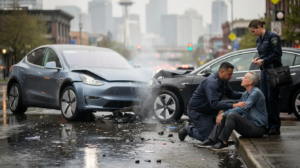
Car Accident Lawyer Seattle: High-Stakes Liability in 2026 Electric Vehicle Crashes
Quick Overview Of Seattle Car Accident Trends For 2026 EV Crashes
Seattle’s roads are changing quickly. Electric vehicles, hybrid vehicles, e-bikes, delivery fleets, rideshare vehicles, autonomous vehicle testing, and advanced driver assistance systems now share streets with pedestrians, cyclists, buses, electric scooters, freight trucks, and traditional gas-powered vehicles. For anyone hurt in a seattle car accident, those changes can make a car accident case more technical, more expensive, and more contested than a standard auto accident claim.
Public crash data remains an important starting point. Seattle reported thousands of crashes in recent years, including roughly 8,443 total crashes in 2023 after 8,408 in 2022, based on publicly available Seattle and Washington crash data sources. SDOT has also published a public traffic volume and crash data dashboard to make crash information more accessible, while WSDOT maintains a statewide collision data portal for crash-related statistics and requests.
The 2026 concern is not simply that electric vehicles are new. It is that EV crashes often involve a wider range of evidence and responsible parties. A traditional motor vehicle accident may focus on driver behavior, traffic rules, insurance coverage, medical treatment, and property damage. An accident involving an EV may also involve vehicle diagnostics, firmware versions, event data recorders, telematics, software updates, battery design, high-voltage components, app-based controls, charging history, manufacturer warnings, repair records, and post-crash fire risks.
Why EV Crashes Create Unique Urban Risks In Seattle
Seattle’s urban environment makes EV-related car crash claims especially complicated. Dense intersections, steep hills, wet pavement, bus lanes, protected bike lanes, curbside delivery zones, loading areas, and high pedestrian activity can all affect how a car accident happens. EVs also have features that can change the risk profile of a collision, including near-silent low-speed operation, instant torque, heavier battery packs, and extensive onboard data recording.
Low-speed quiet operation matters in neighborhoods where pedestrians and cyclists rely partly on sound to detect traffic. Federal regulators created minimum sound requirements because hybrid and electric vehicles operating at low speeds may be harder for pedestrians to hear, especially in parking lots, crosswalk approaches, alleys, and curbside loading areas.
EV weight is another major factor. The Insurance Institute for Highway Safety has warned that while electric vehicles can be safe for their own occupants, the added weight from battery packs may increase risks to occupants of lighter vehicles and vulnerable road users. In a serious car accident, increased mass can affect crash forces, crush patterns, occupant loading, and injury severity.
Why Liability Is Evolving For Auto Accident Claims
Liability in an EV auto accident may involve more than the conduct of one driver. A case can involve a negligent driver, a commercial fleet operator, a rideshare company, a vehicle manufacturer, a battery supplier, a software developer, a repair shop, a charging equipment vendor, or a maintenance contractor. A car accident lawyer must evaluate whether the crash came from human decision-making, defective technology, poor maintenance, software calibration, inadequate warnings, or a combination of causes.
This is why Seattle car accident lawyers handling EV claims need to understand both personal injury law and technical evidence. A personal injury claim may turn on who had control of the vehicle involved, whether driver assistance software was engaged, whether a safety system failed to respond, whether a prior over-the-air update changed vehicle behavior, and whether the vehicle recorded data that supports the injured person’s version of events.
Why Hire A Seattle Car Accident Lawyer From A Law Firm Experienced With Serious Injury Claims
Hiring a car accident lawyer after an EV crash can be valuable because early decisions often shape the entire legal process. In a standard car accident settlement, the main evidence may include the police report, photographs, medical records, repair estimates, and witness statements. In a high-tech EV case, the most important evidence may be stored inside the vehicle, on the manufacturer’s servers, in a fleet-management platform, or with a third-party telematics provider.
An experienced car accident lawyer can send preservation letters, identify potential defendants, review liability insurance, analyze policy limits, coordinate expert inspections, and communicate with insurance companies before digital evidence disappears. The goal is to help car accident victims recover compensation supported by clear proof, not speculation.
Brumley Law Firm’s attorneys bring substantial combined legal experience, including work on Washington personal injury matters. The firm’s experience with complex accident cases can help injured clients understand medical bills, future treatment needs, insurance tactics, settlement negotiations, and litigation options.
Litigation Advantages In EV Crash Claims
EV cases often require advanced litigation capabilities. A car accident attorney may need to subpoena software logs, request event data recorder downloads, inspect high-voltage battery components, depose corporate representatives, obtain repair records, and work with technical experts who can explain vehicle behavior in plain language.
Those steps matter because insurance adjusters may initially frame the car accident as a simple rear-end crash, lane-change dispute, or pedestrian incident. A detailed investigation may reveal that the vehicles involved had software warnings, braking irregularities, sensor limitations, delayed maintenance, or crash data that changes how fault is allocated.
In contested injury claims, legal representation may help organize evidence, evaluate damages, and address insurance disputes. Every case depends on its own facts, evidence, insurance coverage, and applicable law. That does not guarantee a specific result, but it supports the practical point that legal representation can matter when damages, evidence, and insurance coverage are contested.
Contingency Fee Basis And Access To Legal Assistance
Many accident victims delay seeking legal assistance because they are worried about immediate costs. Brumley Law Firm offers a free consultation and generally handles personal injury cases on a contingency fee basis. Attorney fees, case costs, expense responsibility, and the method for calculating any fee are explained in a written fee agreement before representation begins.
This structure can be especially important after a serious car accident because an injured person may already be dealing with medical expenses, lost wages, health insurance issues, transportation problems, property damage, and future medical bills. A contingency fee arrangement may allow injured clients to begin a case without hourly attorney billing. The written fee agreement will explain attorney fees, case expenses, and when any amounts may be owed.
Types Of Car Accident Cases Including High-Tech EV Crashes
EV crashes can appear in nearly every car accident category. Some involve a single driver who loses control on wet pavement. Others involve multiple vehicles, rideshare passengers, commercial trucks, cyclists injured in Seattle bicycle accidents, scooter riders, or pedestrians. The technology may be new, but the injuries and financial consequences can be familiar: medical care, medical costs, lost income, pain, anxiety, property losses, and long-term disruption.
A seattle car accident involving EV technology may include distracted driving, speeding, driving under the influence, unsafe lane changes, red-light violations, failure to yield, sudden braking, charging-related hazards, battery fires, or software-performance questions. Common causes of car accidents in Seattle still include distracted driving, speeding, and impaired driving, but EV evidence may help prove what happened before impact.
Multi-Vehicle Collision Scenarios
Multi-vehicle EV crashes can create difficult fault questions. For example, an EV may stop suddenly because of automated braking, causing a chain-reaction crash. A delivery vehicle may block visibility near a crosswalk. A rideshare EV may collide with another vehicle while merging near I-5, Aurora Avenue, Rainier Avenue, or West Seattle Bridge approaches. A rear vehicle may have limited braking distance because of rain, grade, or traffic congestion.
When several vehicles involved in the same crash have different insurers, each insurance company may attempt to shift responsibility. A Seattle car accident lawyer can review the accident scene, police investigation, vehicle damage, onboard data, dashcam footage, and witness statements to determine how each party’s conduct may have contributed.
Commercial Vehicle And Trucking Crashes
Commercial trucking incidents involving EVs can be especially severe because of size and weight differences. A passenger EV may be heavy compared with a gas-powered sedan, but a Seattle truck accident involving a commercial truck, box truck, delivery van, or freight vehicle can still cause catastrophic injuries. Trucking cases may involve driver logs, employer policies, maintenance records, route schedules, loading practices, and commercial liability insurance.
If an EV is part of a fleet, the case may also involve telematics dashboards, driver-monitoring systems, charging records, maintenance alerts, and fleet-management software. Those records may show speed, location, acceleration, braking, driver attention warnings, battery status, or system faults.
Autonomous Vehicle And Software-Failure Crashes
Semi-autonomous systems create another layer of complexity. Liability in accidents involving systems like lane keeping, adaptive cruise control, automated braking, or advanced driver assistance may depend on whether the driver, software, or both were controlling key driving tasks at the time of the collision.
Washington’s current autonomous vehicle framework includes Chapter 46.92 RCW provisions for autonomous motor vehicle testing, while proposed 2026 autonomous vehicle legislation would create a broader structure for autonomous motor vehicles, including language about vehicles operating without a human driver and insurance requirements. As of May 3, 2026, the Washington Legislature’s bill page lists SB 6243 as pending in Senate Transportation. Because legislation can change, readers should confirm the current status before relying on it.
That distinction matters. A personal injury lawyer should not assume that proposed legislation is binding law. Instead, counsel should review current statutes, federal safety rules, manufacturer materials, and the specific vehicle data to determine whether the driver, vehicle owner, operator, software provider, or manufacturer may bear responsibility.
Battery Fire And Thermal-Runaway Incidents
High-voltage lithium-ion batteries can create post-crash risks that differ from gasoline-powered vehicles. Battery damage may lead to thermal runaway, smoke, toxic gas concerns, reignition, delayed fire hazards, or special towing and storage needs. These incidents can also lead to severe traumatic brain and other catastrophic injuries. NHTSA’s Battery Safety Initiative focuses on research and safety risks related to EV batteries, while SSB 5812 required the Washington State Patrol to study EV fires, best practices for fire response, and cleanup and disposal concerns.
For injury claims, a battery fire can affect both liability and damages. A low-impact collision may become a severe injury case if a defective battery design, inadequate shielding, damaged component, or delayed warning contributed to burns, smoke inhalation, internal injuries, or wrongful death.
Wrongful Death Auto Accident Cases
A wrongful death case involving an EV may arise from a high-speed collision, post-crash fire, pedestrian impact, commercial fleet crash, or autonomous-vehicle-related incident. These cases require careful review of responsible parties, available insurance coverage, economic damages, non-economic damages, and family losses.
Families may need help obtaining the collision report, preserving the vehicle, securing autopsy or medical examiner records where applicable, communicating with insurers, and understanding who may bring a claim under Washington law. Brumley Law Firm can provide wrongful death support and help families navigate the legal process during an extremely difficult time.
High-Stakes Liability Issues In 2026 Electric Vehicle Crashes
EV liability can be high-stakes because damages may be substantial and defendants may be sophisticated. A single crash can involve catastrophic injuries, brain injuries, spinal cord injuries, severe burns, fractures, internal injuries, psychological trauma, and long-term disability. The cost of future treatment, home modifications, lost earning capacity, and future expenses can quickly exceed basic policy limits.
The financial stakes are not limited to one family. According to the NHTSA crash cost report, motor vehicle crashes cost the United States hundreds of billions of dollars in economic losses, including medical, legal, insurance, emergency service, property damage, and workplace costs.
Product Liability Claims Against Manufacturers
Under Washington product liability law, a product manufacturer may be subject to liability when harm is connected to negligent design, inadequate warnings or instructions, or a product that was not reasonably safe in construction. In an EV crash case, that statute may be relevant when battery design, crash protection, warning systems, or component defects are disputed.
This is supported by RCW 7.72.030, which addresses manufacturer liability for products that are not reasonably safe as designed, products with inadequate warnings or instructions, and products that are not reasonably safe in construction.
In an EV crash, product liability questions may involve battery placement, pack shielding, cooling systems, crash isolation systems, emergency disconnects, door locks, post-crash warnings, automated braking, sensor design, or software behavior. A manufacturer may dispute whether the crash caused the alleged defect or whether misuse, repair history, or driver conduct contributed. That is why expert analysis is often necessary.
Software Defect And Over-The-Air Update Liability
Over-the-air updates can improve vehicle safety, but they can also complicate evidence. A vehicle’s behavior on the day of a crash may depend on the firmware installed at that exact time. If an update changed braking logic, pedestrian warning sounds, driver-monitoring thresholds, battery management, or autonomous system limits, that information may be central to the case.
A car accident attorney should ask: What software version was installed? Was the update successful? Were there known bugs? Did the driver receive warnings? Did the manufacturer issue a recall, service bulletin, or safety notice? Did the software record driver attention, disengagements, collision warnings, or system faults?
Battery Design And Component Negligence Issues
Battery-related claims may involve pack design, thermal barriers, venting, cell chemistry, manufacturing quality control, module placement, cooling loops, sealing, electrical isolation, and crashworthiness. A battery fire after a low-impact collision does not automatically prove a defect, but it should trigger a deeper investigation.
The legal question is not simply whether the EV caught fire. It is whether the fire or thermal event was foreseeable, whether the design was reasonably safe, whether warnings were adequate, whether safer alternatives existed, and whether a component failure caused or worsened the injuries.
Third-Party Vendor And Maintenance Liability
Third-party vendors can also play a role. A repair shop may have improperly serviced high-voltage systems. A fleet contractor may have ignored maintenance alerts. A charging station vendor may have contributed to battery damage. A software or sensor supplier may have provided a defective component. A used-car seller may have failed to disclose prior crash or battery repair history.
Identifying responsible parties early helps protect the personal injury claim. It also helps locate insurance coverage, including commercial liability insurance, product liability policies, garage policies, fleet policies, and umbrella coverage.
Investigation And Evidence For Seattle Car Accident Cases
A strong EV investigation starts quickly. Evidence can be overwritten, vehicles can be repaired, batteries can be removed, software can be updated, and surveillance footage can be deleted. It is advisable to consult with a car accident lawyer as soon as possible after an accident because early legal involvement helps preserve evidence while details are still fresh.
After a car accident, accident victims should obtain medical assistance, call 911 if needed, document the accident scene, notify their insurance company as required by the policy, and avoid giving broad recorded statements to insurance adjusters before understanding their rights. The Washington Office of the Insurance Commissioner explains that when filing an auto insurance claim, drivers should understand the coverage and claims process outlined in their policy.
Preserve EV Event Data Recorder Immediately
Modern EV investigations rely heavily on event data recorders and related vehicle systems. These systems may capture speed, steering input, braking, throttle application, seatbelt use, driver-assistance activity, airbag deployment, pre-impact movement, driver attention metrics, and post-crash diagnostic trouble codes.
This data can help prove whether a vehicle involved in the crash accelerated unexpectedly, braked late, failed to detect a pedestrian, disengaged a driver-assistance system, or recorded warnings before impact. Preservation letters should be sent quickly to vehicle owners, insurers, manufacturers, fleet operators, and anyone else with access to the vehicle or cloud-based data.
Subpoena Over-The-Air Software Logs
Over-the-air software logs can show whether a safety update was pending, completed, delayed, failed, rolled back, or changed the vehicle’s operation. These logs may also reveal whether the manufacturer knew about a recurring issue before the crash.
A subpoena or discovery request may seek update history, release notes, diagnostic logs, bug reports, incident reports, engineering communications, recall information, warranty claims, and customer complaints. In high-stakes litigation, protective orders may be needed to manage proprietary software evidence while still allowing expert review.
Collect Vehicle Diagnostics And Firmware Versions
Vehicle diagnostics can identify battery faults, sensor malfunctions, camera failures, radar limitations, braking system codes, steering errors, and driver-monitoring alerts. Firmware versions are critical because two vehicles of the same model may behave differently if they run different software.
An experienced car accident lawyer may retain a vehicle forensics specialist to inspect the EV, download available data, photograph components, document physical damage, and preserve the chain of custody. This helps prevent later disputes over whether evidence was altered, lost, or misunderstood.
Obtain Police Reports And Traffic Camera Footage
The collision report is often one of the first documents reviewed in a seattle car accident claim. It may identify the vehicles involved, drivers, witnesses, officer observations, citations, weather, road conditions, injuries, and the officer’s initial view of how the car crash occurred. The report is not always the final word, but it can guide the investigation.
Traffic camera footage, nearby business surveillance, dashcam footage, bus camera video, rideshare app data, and home security footage may be available for only a limited time. A law firm should move quickly to request or preserve this evidence.
Interview Witnesses And Preserve Statements
Witness statements can be especially helpful in EV cases because the technology may not be obvious from the outside. A witness may remember whether the EV made sound, whether lights flashed, whether the driver appeared distracted, whether the vehicle stopped suddenly, whether a pedestrian had time to react, or whether smoke appeared after impact.
Statements should be collected carefully and promptly. Memories fade, and witnesses may move or become difficult to locate. A detailed witness interview can support a fair settlement or strengthen a personal injury lawsuit if the insurer disputes liability.
Serious Injuries, Medical Treatment, And Medical Records
EV crashes can cause the same serious injuries as any automobile accident, including whiplash, fractures, concussions, brain injuries, spinal cord injuries, shoulder trauma, knee injuries, abdominal trauma, internal injuries, burns, smoke inhalation, and psychological distress. In collisions involving transit vehicles, a Seattle bus accident attorney may need to address similar injury patterns. In battery fire cases, medical treatment may also involve burn care, respiratory evaluation, toxic exposure concerns, skin grafting, or long-term scarring.
Car accident victims should seek medical care promptly, even when symptoms appear manageable. Some injuries worsen after adrenaline fades. Delayed treatment can also give insurance companies an opportunity to argue that the injury was unrelated or less serious.
Document Emergency Medical Treatment
Emergency medical treatment received after the crash should be documented from the beginning. That includes ambulance records, emergency department records, imaging, lab tests, discharge instructions, prescriptions, specialist referrals, and follow-up recommendations.
This documentation helps connect the personal injury claim to the crash. It also helps establish immediate costs, future treatment needs, and the seriousness of the injuries.
Request Complete Medical Records Early
Medical records should include more than visit summaries. A complete file may include physician notes, diagnostic imaging, radiology reports, surgical records, physical therapy notes, pain-management records, medication history, work restrictions, and referrals.
A car accident settlement should not be evaluated before the injured person understands the medical prognosis. Settling too early may leave future medical bills, future expenses, and future treatment needs underfunded.
Retain Treating Physician Statements For Prognosis
Treating physician statements can explain whether an injured person has reached maximum medical improvement, whether symptoms are expected to improve, whether surgery may be needed, whether permanent impairment exists, and whether future care is likely.
These statements matter in cases involving catastrophic injuries, brain injuries, spinal cord injuries, chronic pain, post-concussion symptoms, burns, or long-term functional limitations. They also help show how the crash affected work, family life, mobility, and independence.
Track Ongoing Rehabilitation And Future Care Needs
Rehabilitation tracking can include physical therapy, occupational therapy, speech therapy, cognitive therapy, counseling, vocational rehabilitation, pain management, mobility assistance, and home-care needs. A personal injury lawyer can help organize records so damages are not limited to immediate costs.
For severe injuries, damages may include future medical bills, lost earning capacity, home modifications, transportation changes, assistive devices, and future medical coverage concerns. These costs incurred after the crash can be central to obtaining fair compensation.
Personal Injury Claims, Wrongful Death, And Pursuing Available Compensation
A personal injury claim seeks compensation for losses caused by the crash. In Washington, individuals injured in car accidents can seek compensation for medical expenses, lost wages, pain and suffering, property damage, and other damages supported by the evidence. Compensation may also include future medical expenses and lost earning capacity, not just immediate costs.
The phrase maximum compensation should be understood carefully. No lawyer can promise a result. The goal is to pursue the full compensation available under the facts, insurance coverage, liability evidence, and Washington law.
Economic Damages To Calculate
Economic damages are financial losses that can often be documented through bills, receipts, employment records, and expert projections. These may include medical bills, medical expenses, medical costs, rehabilitation expenses, lost wages, reduced earning capacity, property damage, transportation costs, household services, and future care.
In EV cases, property damage may be unusually high because battery packs, sensors, cameras, calibration systems, and onboard computers can make repairs expensive. Total loss disputes may also involve battery condition, prior software issues, and market value. Similar high-stakes losses can occur in Seattle motorcycle accident cases where the rider and vehicle often sustain severe damage.
Non-Economic Damages To Calculate
Non-economic damages address human losses that do not come with a simple invoice. These may include pain, suffering, emotional distress, disability, disfigurement, loss of enjoyment of life, inconvenience, anxiety, sleep disruption, and loss of normal daily activities.
Severe injuries can change the injured person’s identity, independence, and relationships. Experienced personal injury attorneys present these losses through medical records, client statements, family testimony, photographs, day-in-the-life evidence, and expert opinions where appropriate.
Wrongful Death Claim Elements
Wrongful death claims require careful legal and factual review. The case may involve proof of liability, statutory beneficiaries, estate issues, funeral expenses, loss of support, loss of companionship, and the relationship between the crash and the death.
When an EV crash involves fire, autonomous technology, commercial vehicles, or product defects, a wrongful death case may require multiple experts and rapid preservation of physical and digital evidence.
Strategies To Pursue Fair Compensation
A strategy for fair compensation may include immediate evidence preservation, complete medical documentation, expert reconstruction, policy-limit analysis, lien review, settlement demand preparation, and trial readiness. A fair settlement should reflect liability risks, injuries, future treatment, insurance coverage, and the long-term impact on the injured person.
A law firm’s experience handling complex personal injury matters can help organize evidence, evaluate litigation risks, and prepare the claim carefully. Past experience does not guarantee any result.
Health Insurance, Medical Liens, And Post-Crash Billing
Health insurance can help pay for treatment after a crash, but it does not always resolve the billing picture. Providers, health plans, Personal Injury Protection (PIP) insurers, government benefit programs, or medical lien holders may claim reimbursement from a future recovery. These lien issues can affect the net amount the injured person receives.
The Washington Office of the Insurance Commissioner explains that Personal Injury Protection, or PIP is optional coverage that can help pay medical and hospital costs, lost wages, services an injured person cannot provide, and funeral costs after an auto accident.
Notify Health Insurance Of Crash-Related Treatment
An injured person should be accurate when reporting crash-related treatment to health insurance, providers, and auto insurers. Some health plans require notice when treatment relates to an accident because the plan may later seek reimbursement from a settlement.
The key is coordination. Medical coverage from health insurance, PIP, MedPay, UM coverage, or liability insurance may overlap. A car accident lawyer can help track who paid what and what must be resolved before settlement funds are distributed.
Identify Possible Medical Liens Against Recovery
Medical liens may come from hospitals, doctors, health insurers, government programs, or providers who treated the injured person under a lien agreement. These liens should be identified early so the car accident settlement is not delayed at the end.
Lien review also helps prevent surprises. An injured person should know whether a large portion of the settlement may be claimed by medical providers or insurers.
Negotiate Lien Reductions With Providers
In some cases, lien reductions can improve the injured person’s net recovery. A law firm may negotiate with providers, health plans, or lien administrators to account for disputed liability, limited coverage, attorney fees, costs, or hardship.
This process is especially important in a serious car accident where medical bills are high and liability insurance may be limited.
PIP And Uninsured Motorist Options
Uninsured motorist coverage is designed to provide financial protection when a crash involves uninsured or underinsured drivers. If a driver is injured by an uninsured motorist, their own UM coverage may help cover medical bills, lost wages, and other damages up to policy limits. Washington requires drivers to carry proof of liability insurance, but the Office of the Insurance Commissioner’s uninsured or underinsured driver guidance notes that some drivers do not have insurance that covers all damage and injuries they cause, while others drive illegally without auto insurance.
In Washington State, uninsured motorist coverage is not legally required, but it is highly recommended because it protects drivers from the financial risks associated with accidents involving uninsured or underinsured drivers. Accident victims should review their declarations page for UM, UIM, PIP, MedPay, and other insurance coverage.
How Fault, Comparative Negligence, And Statute Of Limitations Affect Seattle Personal Injury Law Claims
Washington follows a pure comparative fault rule. Under RCW 4.22.005, an injured person’s share of fault can reduce compensatory damages proportionately, but it does not automatically prevent recovery.
In plain terms, an injured person can still recover compensation even if they share some responsibility for the accident. If total damages are $100,000 and the person is found 60% responsible, recovery may be reduced by 60%, leaving $40,000. The same principle can apply even when a person is mostly responsible, although the final recovery is reduced by the assigned percentage.
Fault Allocation Among Multiple Responsible Parties
Comparative fault allows fault to be apportioned among multiple parties. In an EV case, that could include negligent drivers, a commercial operator, a vehicle owner, a manufacturer, a maintenance vendor, or another responsible party.
This matters because insurance adjusters may use fault arguments to reduce payouts. A careful investigation can counter incomplete assumptions and show how different actions or system failures contributed to the accident involving the injured person.
Three-Year Filing Deadline And Possible Exceptions
In Washington, the general statute of limitations for personal injury claims, including car accident claims, is commonly three years from the date of the crash under RCW 4.16.080, though certain exceptions can affect the filing window depending on the facts.
Some exceptions may affect when a filing window begins or ends, such as claims involving minors, delayed discovery in certain circumstances, government-related notice requirements, or other legally specific issues. Accident victims should not rely on assumptions. A car accident attorney can review deadlines and help avoid missed filing windows.
Insurance Claim Challenges After EV Crashes
Insurance claim challenges often increase when EVs are involved. Insurers may dispute whether the injury came from the crash, whether the vehicle was repaired properly, whether the battery condition was related, whether software evidence is available, or whether the injured person’s medical treatment was necessary.
Insurance tactics may include requesting broad medical authorizations, minimizing low-speed crashes, blaming preexisting conditions, delaying decisions, disputing future care, or arguing that vehicle data is inconclusive. Legal assistance can help level the process by organizing evidence and requiring insurers to address the full facts.
How A Seattle Car Accident Lawyer Builds Strong EV Crash Cases
A Seattle car accident lawyer builds a strong EV case by combining traditional accident investigation with technical analysis. The legal process should not begin and end with a police report. It should include medical proof, digital evidence, physical evidence, expert review, insurance analysis, and a clear damages narrative.
The more serious the injuries, the more careful the case preparation must be. A severe injuries case may require months of treatment before the full damages picture is known.
Early Case Assessment
Early case assessment begins with reviewing police and crash scene reports, photographs, videos, repair estimates, insurance policies, medical records, and witness information. Attorneys also assess the accident scene for visibility, traffic controls, pavement conditions, crosswalk design, signal timing, bike lanes, and camera locations.
In an EV case, early assessment should also identify the make, model, trim, battery type, driver assistance features, software version, and whether any warnings, recalls, or service campaigns may relate to the crash.
Assess Potential Defendants And Coverages
Potential defendants may include a driver, vehicle owner, employer, delivery company, rideshare company, commercial carrier, manufacturer, component supplier, charging vendor, repair shop, or government entity if roadway conditions are implicated.
Coverage evaluation may include liability insurance, UM/UIM coverage, PIP, commercial policies, umbrella policies, product liability coverage, and fleet coverage. This step helps determine whether available insurance can address medical expenses, lost wages, future expenses, and non-economic damages.
Preserve Physical And Digital Evidence
Physical evidence may include the damaged vehicle, battery pack, tires, brakes, sensors, cameras, control modules, seatbelts, airbags, and debris. Digital evidence may include event data, telematics, cloud logs, software updates, GPS records, driver-monitoring alerts, app data, and charging history.
Preservation is not automatic. A law firm should act early to prevent repair, disposal, sale, software overwrite, or evidence loss.
Expert Network And Technical Investigation
High-stakes EV cases often require an expert network. The right experts can explain what happened, why it happened, what injuries resulted, and what the long-term financial impact may be.
Experts also help translate technical evidence for insurance companies, judges, juries, and opposing counsel. Clear explanation matters when a claim involves unfamiliar technology.
Crash Reconstruction Specialist
A crash reconstruction specialist can analyze speeds, angles, braking, sightlines, delta-v, crush damage, skid marks, roadway geometry, and vehicle movement. In multi-vehicle crashes, reconstruction can help determine sequence and impact forces.
For EVs, reconstruction may also incorporate event data recorder outputs, telematics, and driver-assistance system activity.
Battery And Fire Forensic Expert
A battery and fire forensic expert can evaluate whether thermal runaway occurred, whether damage affected high-voltage components, whether the battery reignited, and whether fire behavior was consistent with crash damage, defect, improper repair, or other causes.
This expert may inspect battery modules, burn patterns, thermal barriers, coolant systems, venting, and post-crash storage procedures.
Software And Vehicle-Forensics Expert
A software and vehicle-forensics expert can review firmware versions, diagnostic trouble codes, log files, system warnings, data downloads, OTA update history, and automated-driving system behavior.
In autonomous vehicle-related collisions, this evidence may show whether the driver had control, whether the system was engaged, whether warnings were issued, and whether the system performed as designed.
Medical And Economic Damage Experts
Medical experts can address diagnosis, causation, prognosis, impairment, future treatment, and long-term care. Economic experts can calculate lost wages, lost earning capacity, future medical bills, care costs, and other financial losses.
These experts are especially important in cases involving catastrophic injuries, permanent disability, brain injuries, spinal cord injuries, or wrongful death.
Litigation And Settlement Strategy
Not every personal injury case goes to trial, but every serious case should be prepared with trial readiness in mind. A strong litigation strategy can improve settlement discussions because it shows the insurer that the claim is supported by evidence and experts.
The strategy should account for liability disputes, comparative fault, product liability defenses, software evidence, medical causation, liens, and damages.
Develop Demand Package For Insurers
A demand package should include a clear liability analysis, photographs, police reports, witness statements, medical records, medical bills, lost wage documentation, expert findings, future care projections, and a settlement demand.
For an EV case, the demand may also include event data, diagnostic findings, firmware information, recall history, battery analysis, and expert opinions about vehicle performance.
Prepare Litigation Plan And Filing Strategy
If settlement discussions do not lead to a fair settlement, filing a personal injury lawsuit may be necessary. A filing strategy should identify claims, defendants, venue, deadlines, evidence needs, expert deadlines, discovery targets, and anticipated defenses.
Strategic filing can be important when insurers delay, deny responsibility, undervalue medical care, or dispute EV-related technical evidence.
Plan Depositions And Trial Exhibits
Depositions may include drivers, witnesses, investigating officers, repair technicians, corporate representatives, software engineers, battery experts, treating physicians, and damages experts. Trial exhibits may include crash diagrams, vehicle data timelines, software update histories, battery diagrams, medical illustrations, and day-in-the-life evidence.
The goal is to make complex EV issues understandable without overwhelming the decision-maker.
FAQs About Seattle Car Accident Lawyer Services And Free Case Evaluation
How Do I Request A Free Case Evaluation?
You can request a free case evaluation by calling Brumley Law Firm at (833) 740-2275 or submitting an online inquiry through the firm’s website. Before sharing detailed or sensitive information, contact the firm to confirm what information is needed for an initial review. Basic information may include the crash date, general location, vehicles involved, whether injuries occurred, insurance information, and whether a police report exists.
What Documents Should I Bring To An Initial Consultation?
Bring the collision report if available, photos, videos, insurance cards, medical records, medical bills, repair estimates, witness names, correspondence from insurance companies, health insurance information, and any notices from providers or lien holders. If the crash involved an EV, also bring the vehicle make, model, trim, VIN, software information if available, and any app screenshots.
What Are Common Case Timeline Milestones?
Common milestones include emergency medical treatment, insurance notice, evidence preservation, medical record collection, investigation, expert review, demand package preparation, settlement negotiation, lawsuit filing if needed, discovery, depositions, mediation, trial preparation, and possible trial. The timeline depends on injury severity, medical recovery, liability disputes, and insurance coverage.
How Does A Contingency Fee Structure Work?
On a contingency fee basis, the attorney fee is generally paid from a recovery if compensation is obtained. The fee agreement should explain the percentage, litigation costs, expenses, and how funds are distributed. During the free consultation, ask how fees and case costs work before signing any agreement.
Should I Notify My Insurance Company?
Yes, most auto policies require prompt notice after a crash. You should report the accident, but be careful with detailed recorded statements, broad medical authorizations, or speculation about fault before speaking with counsel. Your own insurance may provide PIP, UM, UIM, or other benefits that help with medical bills, lost wages, and medical coverage.
What If The EV Was Quiet And A Pedestrian Or Cyclist Did Not Hear It?
Near-silent operation can be relevant, especially at low speeds. Federal safety rules recognize pedestrian-detection concerns for quiet hybrid and electric vehicles. In a pedestrian, bicycle, electric scooters, or scooter accident claim, lawyers may evaluate vehicle sound requirements, speed, crosswalk location, driver attention, lighting, and whether any pedestrian warning system worked properly.
What If An Autonomous System Was Engaged?
A lawyer should determine whether the vehicle was using adaptive cruise control, lane keeping, automated braking, autopilot-style features, or another driver-assistance system. The investigation may focus on who had control, what warnings were issued, whether the driver responded, and whether system limitations were disclosed.
Can I Still Recover If I Was Partly Responsible?
Yes. Washington’s pure comparative fault rule allows recovery even when an injured person shares responsibility, but compensation is reduced by the assigned percentage of fault. For example, if damages total $100,000 and the injured person is 60% responsible, recovery may be $40,000 after the reduction.
Contact Our Seattle Car Accident Law Firm For A Free Case Evaluation
If you were injured in an EV-related car accident, automobile accident, or any serious car accident in Seattle, Brumley Law Firm can review your situation, explain your options, and help you understand the next steps. The firm assists car accident victims with evidence preservation, insurance claim issues, medical records, medical bills, expert review, settlement negotiations, and litigation when needed.
Call Brumley Law Firm at (833) 740-2275 to request a free consultation. You may also submit an online inquiry. Please do not send confidential or highly sensitive information until the firm confirms that it can review your matter. Contacting the firm or submitting information does not create an attorney-client relationship.
If the matter involves wrongful death, severe injuries, language access needs, or urgent evidence concerns, you may note that in your inquiry so the firm can evaluate appropriate next steps.