

Beyond the Helmet: Why Your Seattle Motorcycle Accident Attorney Needs Your GoPro Or Dashcam Data
Beyond the Helmet: Why Your Seattle Motorcycle Accident Attorney Needs Your GoPro Or Dashcam Data
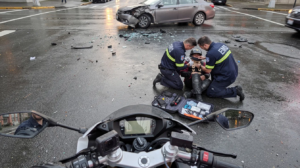
A serious motorcycle accident can unfold in seconds, but the consequences can last a lifetime. When conflicting witness statements, incomplete police reports, and insurance company skepticism collide, one form of proof that can be especially helpful is objective video evidence.
Unlike witness accounts that can be influenced by stress, bias, or limited perspective, video footage from a helmet cam or dash cam provides a real-time, unfiltered record of how the accident occurred. This kind of documentation can influence how a motorcycle accident claim is evaluated, depending on the circumstances. It captures the precise sequence of events, identifies the actions of both the driver and rider, and eliminates ambiguity that often complicates accident claims.
For many motorcycle accident victims, early access to clear footage can immediately shape legal strategy. Attorneys can use this data to determine fault, assess driver negligence, and push back against inaccurate narratives presented by insurance adjusters. In some cases, clear footage may help reduce disputes about how the crash occurred, although the claims process depends on many factors.
Video evidence also plays a powerful role in legal proceedings. Juries tend to rely heavily on visual proof, especially when it shows the moment the accident occurred from a first person perspective. Helmet cam and dash cam footage can be helpful evidence and may strengthen a claim, depending on the facts of the case.
According to the National Highway Traffic Safety Administration (NHTSA), motorcyclists face a significantly higher risk of serious injury compared to other motor vehicle occupants, making clear video evidence especially important in a motorcycle accident claim.
Types Of Devices That Capture Video Footage
Helmet Cam Models Commonly Used By Riders
Many riders today rely on helmet mounted cameras to record their rides. Popular options include GoPro devices, Insta360 cameras, and DJI action cameras. These devices are lightweight, durable, and capable of recording high-definition video with wide-angle lenses that capture the road ahead and surrounding traffic conditions.
Helmet cam footage is particularly valuable because it reflects the rider’s exact viewpoint. This perspective can show lane positioning, traffic signals, and the behavior of the other driver leading up to the crash.
Motorcycle Dash Cameras And Mount Locations
Motorcycle dash cams are another growing source of valuable footage. Unlike helmet cams, these are mounted directly onto the bike. Common placements include:
- Front fairing or handlebars for forward-facing video
- Rear frame or tail section to capture vehicles approaching from behind
- Side mounts for a broader view of adjacent lanes
Many motorcycle dash cams feature loop recording, which continuously overwrites older footage until an incident is detected. After a crash, however, it becomes critical to preserve the relevant clip before it is lost.
Dash Cameras In Surrounding Vehicles
In addition to your own footage, many dash cams installed in nearby motor vehicles can provide supporting evidence. These recordings may come from:
- Other drivers at the scene
- Commercial vehicles equipped with cameras
- Business surveillance cameras near intersections
These external sources can corroborate your own footage and provide additional angles that strengthen your motorcycle accident case.
What To Do Immediately After A Motorcycle Accident To Preserve GoPro Footage
Power Off Device And Remove Memory Card
Once the accident occurred and you are safe, one of the most important steps is to stop recording immediately. Turn off your device to prevent loop recording from overwriting valuable footage. Carefully remove the memory card and store it securely.
Make At Least Two Digital Backups Of Original Files
Create multiple backup copies of your gopro footage as soon as possible. Store these copies in separate locations, such as a cloud storage account and an external hard drive. This protects against accidental loss, damage, or deletion.
Avoid Editing Or Posting Footage Online
Do not edit, trim, or enhance the video in any way. Altering footage can raise questions about its authenticity and may affect its admissibility in legal proceedings. Posting the video on social media can also create unnecessary risks, as insurance companies may use it against you.
Deleting or altering footage can even be viewed as spoliation of evidence, which may negatively affect your personal injury claim.
How Personal Injury Law Treats Helmet Cam Footage
Authentication Requirements For Digital Evidence
Under personal injury law, video evidence must be authenticated before it can be used in court. This means proving that the footage is a true and accurate representation of what happened.
Courts typically require testimony or documentation showing:
- The device used to record video
- When and where the recording was made
- That the footage has not been altered
How Footage Supports Negligence Elements
To succeed in a motorcycle accident claim, you must show that the at fault driver acted negligently. Helmet cam evidence can help establish:
- Duty of care under traffic laws
- Breach of that duty, such as an unsafe lane change or running a red light
- Causation linking the driver’s actions to your physical injuries
- Damages, including medical bills and lost wages
Video footage can sometimes capture these elements directly and may serve as strong supporting evidence.
Chain Of Custody Importance For Admissibility
Maintaining a clear chain of custody is essential. This means documenting how the footage was handled from the moment it was recorded to its presentation in court. Any gaps in this process can raise doubts about the integrity of the evidence.
Authenticating And Preparing GoPro Footage For Court
Obtain Device Metadata And GPS Logs
Modern devices record metadata such as timestamps, GPS coordinates, and file creation details. This information helps verify when and where the accident occurred and supports the authenticity of the video.
Capture A Sworn Statement About Recording Circumstances
You may be asked to provide a sworn statement explaining how the footage was recorded. This includes details about the device, its placement, and whether it was functioning properly at the time.
Export Uncompressed Originals For Expert Review
Always preserve the original file format. Attorneys often work with forensic experts who analyze video evidence frame by frame. Compressed or edited versions can reduce clarity and credibility.
Audio Recording And Two-Party Consent Concerns
Applicable State Consent Statutes
Under Washington State Legislature (RCW 9.73.030), recording private conversations generally requires consent from all parties, which can affect how audio recording from dash cams or helmet cam footage is used in legal proceedings.
Remove Or Mute Problematic Audio Tracks
If the audio portion of your video includes private conversations without consent, it may need to be removed or muted. The visual component can still be used if it meets legal standards.
Consult Attorney Before Sharing Recordings Publicly
Before sharing any footage, speak with a personal injury lawyer. Improper disclosure can create complications during the legal process.
Countering Other Driver Arguments With Video Evidence
Video evidence is especially powerful when the other driver disputes fault. Footage can:
- Rebut false witness statements
- Show driver negligence such as distracted driving
- Capture unsafe lane changes or illegal turns
- Use timestamps to confirm speed and timing
This objective video evidence may help address disputes about responsibility, depending on the facts of the case.
Relevance To Car Accident Scenarios And Red Light Collisions
Helmet cam and dash cam footage are equally valuable in bicycle and car accident scenarios. Forward-facing cameras can confirm whether a traffic signal was green or red at the time of impact.
Footage often captures:
- Vehicles running a red light
- Failure to yield at intersections
- Illegal turns
Additional evidence from intersection cameras or law enforcement agencies can further support your claim.
Washington And California Law Considerations For Dash Cameras
Admissibility Rules Comparison
Both Washington and California law allow the use of dashcam footage, but each state has its own requirements for admissibility and privacy.
Helmet Mount Safety And Placement
In Washington, devices must not obstruct the rider’s view. Under California Legislative Information (Vehicle Code), motorcycle-mounted cameras are generally permitted as long as they do not obstruct the rider’s view and are securely mounted.
Placement Restrictions For Dash Cameras
Washington state law restricts where dash cameras can be mounted on windshields. They must be positioned in a way that does not block visibility.
When Video Footage Can Hurt Your Motorcycle Accident Case
Not all footage helps your claim. Video showing:
- Driving recklessly
- Lane splitting in unsafe conditions
- Speeding or aggressive behavior
can weaken your case. Even selective clips can be misleading if taken out of context.
Organizations such as the Motorcycle Safety Foundation emphasize safe riding practices, and video footage that contradicts these standards may negatively affect a motorcycle accident claim.
Privacy And Third-Party Footage Issues
Video often captures bystanders or private conversations. Before using or sharing footage:
- Identify individuals in the video
- Redact sensitive information
- Seek legal review
Managing Social Media Evidence Risk
One of the most common mistakes accident victims make is posting footage online. While it may seem helpful, it can harm your case.
Preserve your own footage, but avoid posting anything publicly without attorney approval.
How Video Footage Helps You Recover Compensation
Video evidence plays a central role in helping motorcycle accident victims recover compensation. It can:
- Establish liability clearly
- Prove causation between the crash and physical injuries
- Document property damage
- Identify hit-and-run drivers
Video evidence may help insurers evaluate disputed facts, but each claim depends on its own evidence, liability issues, and damages. The Insurance Information Institute explains that clear documentation, including video footage, can help insurance companies evaluate accident claims more efficiently and reduce disputes over liability.
Under Washington State Legislature (RCW 4.22.005), your ability to recover compensation may be reduced based on your percentage of fault, which makes objective video evidence critical in determining liability.
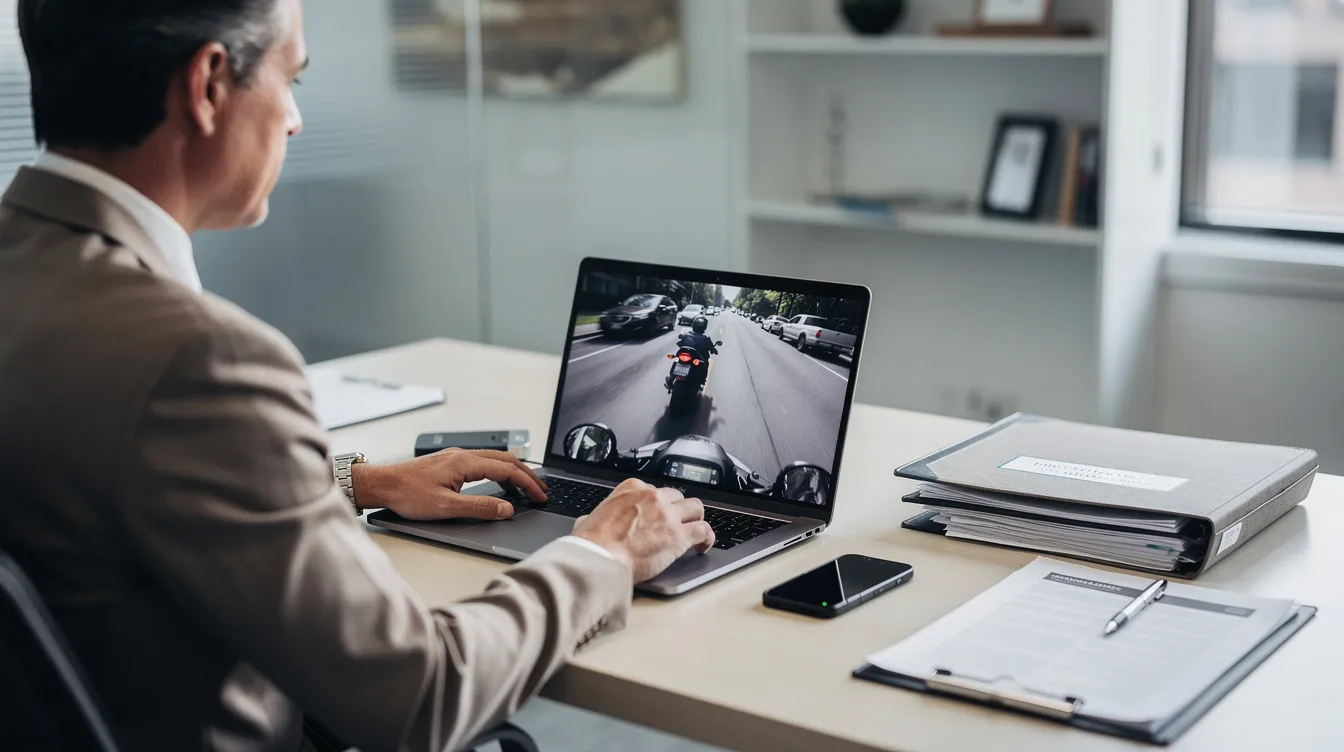
How Your Attorney Uses GoPro And Dashcam Data In Litigation
Experienced attorneys integrate video evidence with other forms of proof, including:
- Medical records
- Police reports
- Scene photographs
They may also work with forensic experts to analyze footage and create demonstrative exhibits for trial.
Evidence Gathering Checklist For Your Attorney
To build a strong motorcycle accident case, provide:
- Original SD card and backup copies
- Police reports
- Witness contact information
- Vehicle event data
- Traffic camera footage
Next Steps: Work With A Seattle Motorcycle Accident Lawyer
Resources like the Washington State Bar Association highlight the importance of working with qualified legal representation when handling complex personal injury cases involving video evidence.
If you have been involved in a motorcycle accident, taking prompt action can make a meaningful difference in how your claim develops. Preserving video evidence, understanding your rights, and organizing documentation early can help support a stronger case.
Working with a Seattle personal injury lawyer, like Joshua R. Brumley, experienced with video evidence may help ensure that critical footage is reviewed and considered as part of the claims process. A thorough evaluation of your situation can clarify your options and guide the next steps in seeking fair compensation for medical expenses, lost wages, and other damages.
You may contact Brumley Law Firm at (833) 740-2275 to request a free consultation. Contacting the firm does not create an attorney-client relationship unless and until the firm agrees in writing to represent you.