

When Do Pedestrians Have the Right of Way?
When Do Pedestrians Have the Right of Way?
When do pedestrians have the right of way? It is a simple question with serious consequences for safety, responsibility, and legal accountability. In Washington State, pedestrian rights are clearly defined, but they are often misunderstood by both drivers and pedestrians. Knowing when pedestrians have the right, and when they must yield, can help avoid collisions, severe injuries, and legal disputes.
This guide explains pedestrian rights and pedestrian laws in Washington State in clear, practical terms. It covers traffic laws, crosswalk rules, traffic signals, accident risks, and what to do after a pedestrian accident. The goal is safer streets, better awareness among all road users, and clarity about legal options after an accident.
Why Pedestrian Right of Way Matters
Pedestrian safety is a major public concern across Washington State. Pedestrian accidents often result in severe injuries or fatalities because pedestrians have little protection when struck by a vehicle. Most people assume pedestrians always have the right of way, but the law is more nuanced.
Understanding right of way refers to knowing who must yield in a specific situation. When pedestrians and drivers both understand their duties, everyone can cross the street and travel the roadway more safely.
Defining Pedestrian Rights and Pedestrian Laws
Pedestrian rights are the legal protections granted to a person walking, using a wheelchair, or assisted by a service animal or white cane. Pedestrian laws set out when pedestrians have priority and when pedestrians must obey traffic laws and yield.
In Washington law, pedestrians include people walking, using mobility devices, scooter riders in some situations, and individuals with visual impairments using a white cane or service animal. These laws apply on sidewalks, streets, intersections, and crosswalks.
Washington State Pedestrian Laws at a Glance
Washington State has some of the strongest pedestrian safety laws in the country. These rules are found in Washington law and are supported by uniform traffic control devices used statewide.
Key principles include:
- Every intersection is a crosswalk unless signs say otherwise.
- Pedestrians have the right of way at marked or unmarked crosswalks.
- Drivers must exercise due care to avoid colliding with any pedestrian.
- Pedestrians must obey traffic signals and traffic control devices.
Official guidance is available from the Washington State Legislature and the Washington State Department of Transportation.
Right of Way at Intersections
Intersections are where most pedestrian accidents occur. Pedestrians are most often hit by drivers while crossing the road.
Under Washington law, all intersections are considered legal crossings. This means drivers must stop for pedestrians at intersections, whether the crosswalk is marked or unmarked, unless the intersection is closed or restricted.
Drivers must stop at a stop sign and yield to pedestrians already in the crosswalk or about to enter it on their half of the roadway.
Marked Crosswalks Explained
Marked crosswalks are identified by painted lines, stripes, or other visible markings on the road. These painted lines clearly indicate where pedestrians should cross safely.
In marked crosswalks, pedestrians have the right. Drivers must stop and remain stopped to allow pedestrians to cross safely to the other side. It is prohibited for drivers to overtake another vehicle that has stopped at a crosswalk to allow a pedestrian to cross.
Unmarked Crosswalks and What They Mean
An unmarked crosswalk exists at almost every intersection, even when there are no painted lines. Many drivers mistakenly believe pedestrians do not have the right of way in these locations.
Under Washington law, drivers must yield at unmarked crosswalks just as they would at marked ones. Pedestrians have the right of way when crossing at intersections, whether marked or unmarked.
Why Marked Crossings Are Safer
Although pedestrians have legal protection at unmarked crosswalks, marked crosswalks are often safer. Painted lines and signage alert drivers and reduce confusion.
Pedestrians are encouraged to use marked crosswalks when available to reduce risk and avoid collisions, especially on busy streets with higher speed limits.
Traffic Signals and Pedestrian Crossing Signals
At signalized intersections, traffic signals and pedestrian crossing signals control movement. Pedestrians must obey traffic signals and control devices unless directed otherwise by a police officer.
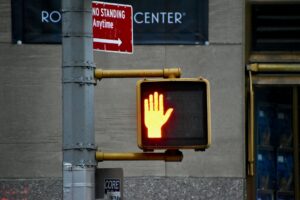
A walking symbol or “Walk” signal means pedestrians may cross. An upraised hand or “Don’t Walk” signal means pedestrians must not start crossing. Pedestrians already in the crosswalk should proceed safely to the curb.
Obeying Traffic Control Devices
Traffic control devices include traffic lights, pedestrian signals, stop signs, and other posted signs. Pedestrians must obey traffic laws just like drivers must obey traffic signals.
Ignoring pedestrian crossing signals can shift fault in an accident and affect legal options for pedestrian accident victims.
Driver Duties and Due Care Obligations
Drivers must exercise due care to avoid colliding with any pedestrian on any roadway. This applies regardless of who technically has the right of way.
Drivers must take all necessary precautions and yield to pedestrians using a white cane, service animal, or wheelchair. Drivers should always act to avoid hitting a pedestrian, even if the pedestrian made a mistake.
Violations can result in traffic citations, criminal charges, and civil liability.
Sidewalk Rules for Pedestrians
Pedestrians must use sidewalks when they are available. Sidewalks are designed to keep pedestrians safe and separate from traffic.
If sidewalks are not available, pedestrians must walk on the left side of the roadway or shoulder, facing oncoming traffic. This allows pedestrians to see approaching vehicles and react.
Crossing Outside Crosswalks
Pedestrians must yield the right of way to vehicles when crossing outside of marked or unmarked crosswalks. Crossing mid block or outside legal crossings increases risk and can reduce legal protection.
Pedestrians must not suddenly leave the curb or side of the road and enter the path of a nearby oncoming vehicle.
Common Causes of Pedestrian Accidents
Pedestrian accidents often involve:
- Drivers failing to yield at intersections
- Speeding above the posted speed limit
- Distracted driving
- Poor visibility at night
- Pedestrians crossing outside crosswalks
Vehicle speed plays a major role. Higher speeds significantly increase pedestrian fatalities and the severity of injuries.
Pedestrian Fatalities and Injury Trends
Across Washington State, pedestrian fatalities remain a serious concern. Urban areas with heavy traffic see the highest risk, especially at intersections and busy streets.
Understanding pedestrian safety laws and obeying traffic laws can reduce these tragic outcomes.
Determining Fault After a Pedestrian Accident
Washington follows an at fault system and a pure comparative negligence model. The driver who caused the accident is typically held liable, but fault can be shared.
If pedestrians do not obey traffic laws, they may be found partially at fault. Determining fault involves reviewing driver behavior, pedestrian actions, traffic signals, and control devices.
What to Do Immediately After Being Hit by a Car
If you are hit by a vehicle as a pedestrian, call 911 as soon as you are safe. A police officer should respond and create an accident report.
Seek immediate medical attention, even if you feel fine. Some injuries are not obvious right away.
Gathering Evidence at the Scene
Gathering evidence is critical after a pedestrian accident. Take photographs of the scene, the vehicle, traffic signals, and any painted lines or crosswalk markings.
Collect witness information and statements if possible. These steps help protect pedestrian accident victims and support future claims.
Medical Records and Documentation
Medical records link injuries to the accident. Keep copies of emergency treatment, follow up care, and any diagnosis related to severe injuries.
Documentation also supports claims for lost wages and future care needs.
Compensation and Legal Options
Injured pedestrians may be entitled to compensation for medical bills, lost wages, pain, and other damages. Insurance companies have their own interests in mind, so it’s important to understand your rights before accepting a settlement.
Understanding legal options early can help protect your rights and avoid costly mistakes. Filing deadlines apply under Washington State law.
When Legal Guidance Can Help
Consulting with a personal injury lawyer after a pedestrian accident can help you understand your options, gather evidence, and navigate insurance issues.
For accidents involving large vehicles, internal resources such as Brumley Law Firm’s Seattle truck accident lawyer page can provide additional context on complex injury cases.
Safety Tips for Pedestrians
Pedestrian safety starts with awareness:
- Use marked crosswalks whenever possible
- Obey traffic signals and pedestrian crossing signals
- Make eye contact with drivers
- Avoid distractions while walking
- Cross safely and deliberately
These necessary precautions help pedestrians stay visible and predictable.
Safety Tips for Drivers
Drivers should:
- Slow down near intersections
- Watch for pedestrians at marked or unmarked crosswalks
- Never pass a stopped vehicle at a crosswalk
- Yield to pedestrians, bicyclists, and other road users
These habits help keep pedestrians safe and reduce accidents.
Resources on Washington Pedestrian Laws
Helpful public resources include:
- Washington Revised Code (Pedestrians’ Rights and Duties)
RCW 46.61.235 – Pedestrians’ rights and duties - Washington Revised Code (Crosswalks and Right of Way)
RCW 46.61.240 – Pedestrians’ right of way in crosswalks - Washington Revised Code (Blind and Mobility-Impaired Pedestrians)
RCW 46.61.250 – Right of way of blind persons or persons using service animals - Washington Revised Code (Pedestrian Control Signals)
RCW 46.61.055 – Pedestrian control signals and traffic signals - Washington State Department of Transportation pedestrian safety guidance
- National Highway Traffic Safety Administration pedestrian safety data
These sources provide official explanations of pedestrian laws and safety rules.
Final Thoughts on Pedestrian Right of Way
Pedestrians have the right of way in many common situations, especially at intersections and crosswalks. At the same time, pedestrians must obey traffic laws and act safely.
Drivers and pedestrians share responsibility for road safety. Understanding these rules helps avoid collisions, injuries, and legal disputes.
If you have questions after a pedestrian accident, a free consultation with a lawyer at Brumley Law Firm can help you understand your options. Contact us today at (833) 740-2275.