

Common Excuses Insurance Companies Use to Deny Seattle Motorcycle Claims
Short answer: insurers deny and devalue motorcycle claims more often than car claims, and they tend to lean on the same handful of excuses to do it, “I never saw the motorcycle,” accusations of speeding or lane splitting, or a claim that a rider’s own choices made the injuries worse. Almost every one of these excuses can be countered with the right evidence.
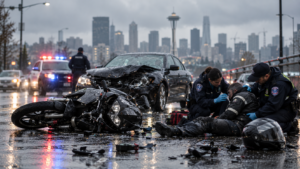
The Washington Traffic Safety Commission recorded 142 motorcyclist fatalities in 2023, the highest number on record for the state. Behind every one of those crashes, and every non-fatal one, is an insurance adjuster whose job is to pay out as little as possible. With motorcycle claims specifically, that job is made easier by a bias that follows riders into the claims process before the facts are even reviewed.
Why motorcycle claims get treated differently in the first place
There is a recognized pattern in the insurance industry sometimes called “biker bias,” the assumption that a motorcyclist was probably speeding, weaving, or otherwise being reckless, simply because they were on a motorcycle. Adjusters, and sometimes even responding officers, can let that assumption color how a claim gets handled from the start, before any real investigation happens.
This matters because Washington is a pure comparative negligence state under RCW 4.22.005. Your compensation is reduced by whatever percentage of fault gets assigned to you, but you are not barred from recovering unless you’re found more than 100 percent at fault, which is impossible. That means every excuse below isn’t really about denying your claim outright. It’s about inflating your percentage of fault, because every point they shift onto you is a point they don’t have to pay.
Excuse #1: “We never saw the motorcycle”
This is the single most common excuse in motorcycle claims, and by itself it isn’t a defense. A driver’s failure to see a motorcycle before turning left across its path, merging into it, or pulling out of a side street is usually evidence of their own failure to look, not evidence that the rider did something wrong. Washington law does not lower a driver’s duty of care just because the other vehicle is smaller or less visible.
What beats it: independent witness statements, the police collision report, and physical evidence like final resting positions and damage patterns that show where each vehicle actually was.
Excuse #2: “You were splitting lanes”
This one comes up constantly, and it deserves an honest answer rather than a dismissive one. Lane splitting, riding between lanes of moving or stopped traffic, is illegal in Washington under RCW 46.61.608. If you actually were splitting lanes when the crash happened, that is a real violation an insurer can point to, and it can genuinely affect your percentage of fault.
But the same statute cuts the other way just as often. RCW 46.61.608(1) entitles every motorcycle to full use of a lane, and states that no vehicle can be driven in a way that deprives a motorcycle of that space. Insurers sometimes label a rider as “lane splitting” when they were simply positioned within their own lane, for visibility or to avoid road debris, which the law fully permits. The difference between a real violation and a mislabeled lane position is exactly the kind of detail that gets sorted out with dashcam or traffic camera footage.
Excuse #3: “You were going too fast”
Speed accusations after a motorcycle crash are frequently based on nothing more than the severity of the damage or the rider’s injuries, not on any actual evidence of speed. This matters because motorcycles are far less protected than cars. A crash at a lawful speed can still produce severe injuries and heavy bike damage simply due to the physics involved, a motorcycle absorbs impact very differently than a vehicle with a frame, airbags, and crumple zones.
What beats it: event data from the other vehicle when available, skid mark analysis, witness accounts of actual speed, and, in serious cases, an accident reconstruction expert who can work backward from the physical evidence rather than assume speed from injury severity.
Excuse #4: Helmet and gear arguments
Unlike Washington’s bicycle helmet rules, which King County repealed in 2022, motorcycle helmets are not optional. Washington maintains a universal helmet law under RCW 46.37.530, requiring a DOT-approved helmet for every operator and passenger, with no age or experience exception.
If you were wearing a compliant helmet, this argument is largely closed before it opens. If you weren’t, or if your helmet didn’t meet the legal standard, an insurer will likely argue that the absence of proper headgear contributed to the severity of your injuries. Under Washington’s comparative fault rule, this can reduce your compensation, but it does not eliminate your claim, and it has no bearing at all on whether the other driver caused the crash in the first place.
Excuse #5: Downplaying the injury itself
Even when fault isn’t seriously disputed, insurers frequently push back on the medical side of a motorcycle claim, arguing that treatment was excessive, that an injury was pre-existing, or that the rider recovered faster than the claim reflects. This tactic isn’t unique to motorcycle cases, but it shows up often here because motorcycle injuries tend to be more severe than comparable car-accident injuries, which means more money is on the table.
What beats it: complete, consistent medical documentation from the start, including follow-up care, rather than gaps in treatment that an adjuster can point to as evidence the injury wasn’t serious.
How these excuses actually affect your payout
None of these tactics need to work completely to hurt you. Under RCW 4.22.005, if an insurer succeeds in shifting even 20 or 30 percent of the fault onto you through one of these arguments, your recovery drops by that same percentage. On a claim worth $150,000, a 30 percent fault shift is $45,000 gone, not because the insurer proved you were mostly at fault, but because they made an argument that stuck.
This is why the goal isn’t just proving the other driver was negligent. It’s making sure none of these excuses are left unanswered.
What to do if you think an excuse is being used against you
- Request the claims adjuster’s stated reason for a denial or reduced offer in writing.
- Do not accept a verbal explanation as final. Insurers are generally required to provide a specific basis for denying or limiting a claim.
- Gather your own evidence independently: photos, witness contacts, and any video you or a nearby business may have.
- Get a second opinion from an attorney before accepting a low offer, since a free consultation costs nothing and a signed release closes your claim for good.
Frequently Asked Questions
Can an insurance company deny my motorcycle claim just because I was riding a motorcycle? No. An insurer cannot deny a claim outright simply because the vehicle involved was a motorcycle. They can, however, use assumptions about motorcyclists to argue you share fault, which is why the specific evidence in your case matters so much.
Is lane splitting actually illegal in Washington? Yes. RCW 46.61.608 prohibits riding between lanes of traffic. The same law also guarantees motorcycles full use of a lane, so not every claim of “lane splitting” holds up once the actual lane position is reviewed.
Do I lose my claim if I wasn’t wearing a helmet? No. Washington’s comparative fault rule means a missing or non-compliant helmet can reduce your compensation if it affected your injuries, but it does not bar you from recovering, and it doesn’t change who caused the crash.
What if the other driver says they never saw me? Not seeing a motorcycle is generally treated as the driver’s failure to look properly, not proof that the rider did anything wrong. Independent evidence, like witnesses and the police report, typically settles this question.
How do I fight a lowball settlement offer on a motorcycle claim? Get the adjuster’s reasoning in writing, gather independent evidence, and have an attorney review the offer against your actual medical bills, lost wages, and long-term care needs before accepting anything.
Talk to a Seattle Motorcycle Accident Attorney
If an insurance company is using any of these excuses to deny or shrink your motorcycle claim, you don’t have to accept their first explanation. Brumley Law Firm represents injured riders throughout Seattle and handles the full range of personal injury practice areas, including motorcycle, car, and truck accident claims.
Call our Seattle office at (206) 737-1705 for a free consultation, available 24/7. There is no fee unless we win.
This article is general information about Washington law and is not legal advice. Reading it does not create an attorney-client relationship. For advice about your specific situation, speak with a licensed attorney.
Sources
- Washington State Legislature via Justia – RCW 4.22.005, Washington’s pure comparative negligence rule. https://law.justia.com/codes/washington/title-4/chapter-4-22/section-4-22-005/
- Washington State Legislature via Justia – RCW 46.61.608, operating motorcycles on roadways laned for traffic. https://law.justia.com/codes/washington/title-46/chapter-46-61/section-46-61-608/
- Washington State Legislature via Justia – RCW 46.37.530, Washington’s universal motorcycle helmet law. https://law.justia.com/codes/washington/title-46/chapter-46-37/section-46-37-530/
- Washington Traffic Safety Commission – 2023 motorcyclist fatality data.